DIY Reusable Food Wraps: Beeswax, Soy, and Plant Waxes Compared
Step-by-step: Make your own reusable food wraps
This method produces a washable, slightly tacky wrap that holds closed with body heat. Read the troubleshooting section afterward for fixes if something goes wrong.
-
Gather materials (per 4–6 medium wraps)
- 100–150 g wax (see materials section below)
- 2–3 tablespoons jojoba oil or coconut oil (optional: softens and reduces brittleness)
- 2 tablespoons pine resin or tree rosin (optional: increases tackiness; only for non-vegan options)
- 4–6 squares of lightweight cotton or linen (about 25 x 25 cm) or hemp-blend fabric
- Parchment paper or a silicone baking mat, a baking tray, a small saucepan or double boiler, a brush or spatula, and an oven or iron
-
Prep fabric
Wash and fully dry fabric to remove sizing. Lay parchment paper on a tray, then place a fabric square on top. Preheat oven to 85–100°C (185–210°F) or set the iron to a low cotton setting.
-
Melt the wax
Use a double boiler or a heatproof bowl over simmering water. Combine wax with oil and resin if using. Stir until fully liquid and uniform. Keep heat moderate — most waxes melt well below 100°C.
-
Apply evenly
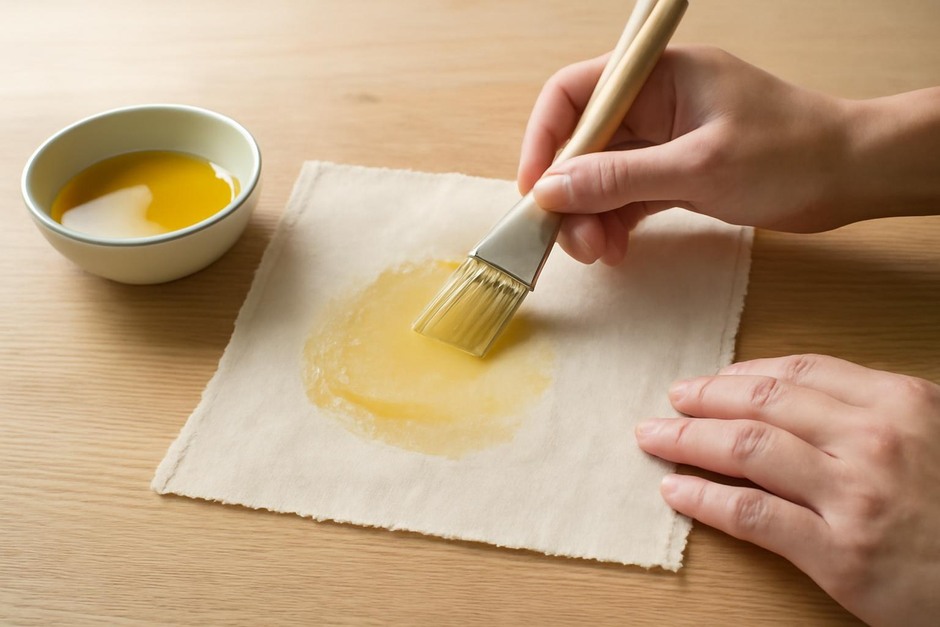
Either brush a thin, even coat of melted wax over the fabric square or drizzle the wax and spread it with a brush. Aim for full coverage but avoid pooling. Flip the fabric and repeat to coat the other side if needed.
-
Set the wax
With parchment under the fabric, place the tray in the preheated oven for 2–4 minutes to let wax flow. Remove and quickly smooth any pools with a brush. Alternatively, sandwich the fabric between two sheets of parchment and press with a warm iron to distribute wax evenly.
-
Cool and finish
Allow wraps to cool flat. Trim edges if desired. Test tackiness by folding over a bowl rim; body heat should make the wrap pliable enough to seal.
Variations and materials trade-offs
The choice of wax and fabric changes performance. Below are common options and their neutral trade-offs to help you decide.
- Beeswax — Pros: naturally antibacterial qualities noted by tradition, pleasant scent, good balance of stiffness and tack when blended with oil. Cons: not vegan, can be stiffer in cold climates and may need more oil or resin for flexibility.
- Soy wax — Pros: plant-derived and more pliable than pure beeswax, often easier to work with at home. Cons: softer at higher temperatures, may lose shape on hot days or near oven vents.
- Candelilla or carnauba (plant waxes) — Pros: vegan and can produce a firmer finish than soy. Cons: firmer waxes may feel brittle unless balanced with oil; some are harder to melt and distribute evenly.
- Resin/rosin (addition) — Pros: increases tackiness and adherence to surfaces. Cons: non-vegan (if pine resin not a concern this may still be acceptable), may darken the fabric and adds stickiness that some users find excessive.
- Fabric types — Lightweight cotton prints easily and holds wax well. Linen and hemp are stronger and more durable over many washes but may soak more wax and feel firmer. Avoid heavy twill or very open mesh for consistent coating.
Troubleshooting: common issues and fixes
- Wrap feels brittle or cracks — Likely too much wax or not enough oil. Re-melt and brush a small amount of jojoba or coconut oil onto the wrap, then warm gently and smooth.
- Wax pools or looks blotchy — Wax was applied too thickly or not heated enough to flow. Reheat in oven briefly and spread with a brush or iron between parchment sheets for an even layer.
- Wrap doesn’t stick to itself or containers — Try adding a small amount of resin for tack, or increase the proportion of softer wax or oil. Test small patches first.
- Wrap is greasy or leaves residue — May have too much oil. Re-melt and blot excess oil with absorbent paper while warm, then allow to set. Alternatively, launder the wrap in cool water and reapply a slightly drier wax mix.
- Mold or persistent odors — Ensure wraps are fully dry before storage, launder by hand in cool water with mild soap, and dry flat. Replace wraps that show persistent mildew or staining.
Testing small batches and keeping notes on your ratios helps refine the balance you prefer between tackiness, flexibility, and durability. Each material brings trade-offs — choose the combination that fits your routines and climate.