Kitchen Work Surfaces: From Hearth Slabs to Contemporary Countertops
When you think of a kitchen counter, you may picture a sleek slab of stone, a warm wooden block, or a practical laminate surface. Yet these modern surfaces are the latest chapter in a long story: people have shaped and adapted horizontal surfaces around a heat source for food preparation for millennia. Understanding that history can help clarify why certain materials and layouts endure, and how to choose a countertop that suits both tradition and contemporary living.
A hearth-centered beginning
Early domestic cooking was centered on the hearth, a place of fire and warmth. Work was done around the open flame: grinding, mixing, and turning pots. As households evolved, flat surfaces adjacent to the hearth—stone slabs, built-in shelves, or simple wooden boards—became convenient staging points. These surfaces were multipurpose: a place to chop, knead dough, rest bowls, and cool baked goods.
Over time, as kitchens separated from communal living spaces and specialized tools developed, the need for dedicated horizontal work areas grew. The idea of a continuous, durable surface for food preparation became embedded in household design, and regional materials influenced how those surfaces looked and performed.
Materials through the ages
Different eras and places favored different materials based on availability, cost, and cultural habits. Stone and clay offered heat resistance and durability; wood provided warmth and a forgiving surface for knives; metal surfaces were easy to clean and popular in professional settings.
- Wood (butcher block and plank tops): Traditionally used in many homes for its resilience and repairability. Scratches and cuts are expected and can be sanded out, which gives wooden surfaces a long life when maintained.
- Stone (granite, soapstone, marble): Valued for heat resistance and solidity. Some stones are porous and need sealing; others patinate over time, developing a character that many find appealing.
- Metal (stainless steel, tin): Preferred in commercial kitchens for hygiene and heat tolerance. In domestic settings, metal offers a modern look and easy-clean surface but can dent or scratch.
- Laminates and composites: Emerged in the 20th century as economical, versatile options. They replicate the appearance of natural materials and provide a uniform, low-maintenance surface.
Each material carries trade-offs between appearance, maintenance, repairability, and environmental footprint. The right choice often balances those factors against how you actually use the kitchen.
Design, workflow, and ergonomics
Historical kitchens were organized around a small number of tasks—cooking over fire, grinding grain, baking bread. Modern kitchens host many activities: meal prep, baking, entertaining, and sometimes work or homework. That diversity makes layout and surface planning essential.
- Plan work zones: Arrange surfaces so that food prep, cooking, and cleanup flow logically. Place a durable, heat-resistant area near cooktops and an easy-to-clean area by the sink.
- Consider height and reach: Counter height affects comfort. Standard heights work for many, but tailoring the height for tasks like baking or heavy chopping reduces strain.
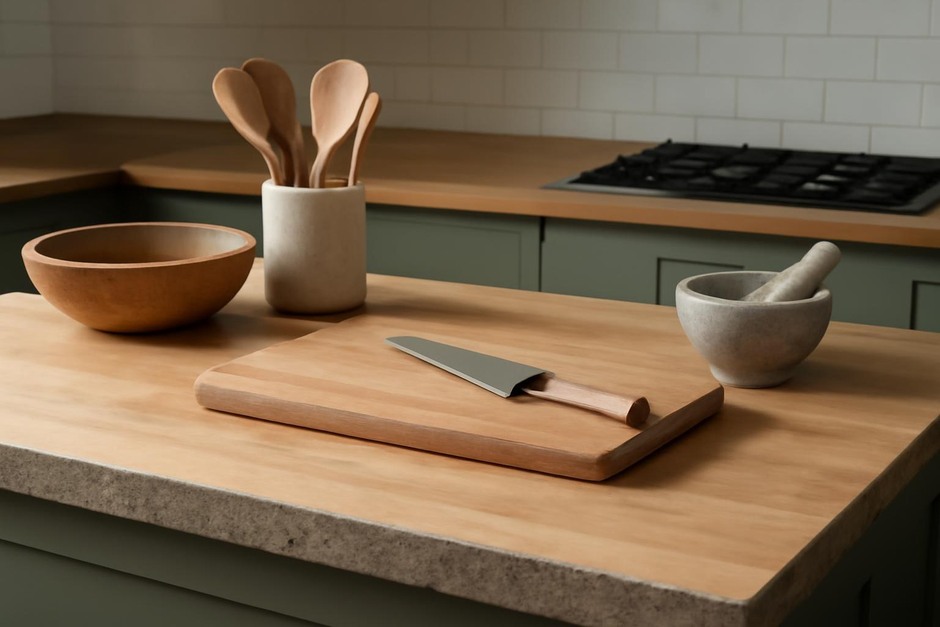
- Mix materials: Combining a warm wooden island for chopping with a stone perimeter counter for hot pots mirrors historical practice—using different surfaces for different needs.
- Allow staging space: Leave clear stretches of countertop for rolling out dough or assembling meals; cluttered surfaces reduce efficiency.
Design choices that acknowledge how you live in the kitchen will serve better than following trends alone. Historical patterns—separating tasks and using material-appropriate areas—remain practical today.
Care, longevity, and sustainability
How a surface is maintained affects both its longevity and environmental impact. Traditional approaches—periodic oiling of wood, re-sealing stone, or gentle cleaning of metal—can extend a countertop’s usable life and reduce the need for replacement.
- Maintenance routines: Simple, regular care prevents damage. Wiping up spills, using cutting boards, and applying protective finishes when recommended will keep surfaces functional longer.
- Repair over replace: Many materials can be refreshed—wood can be sanded; stone can be re-polished; minor laminate damage can be limited with careful repair—echoing earlier eras when objects were repaired rather than discarded.
- Material sourcing: Choosing locally quarried stone, responsibly harvested wood, or recycled composites reduces the countertop’s embodied impact. Smaller countertops or combining materials can further trim resource use.
Ultimately, thinking like a steward—maintaining, repairing, and selecting durable options—aligns modern practice with the historical ethic of making things last.
Conclusion
The kitchen countertop is a practical element shaped by centuries of domestic life. From hearth slabs that served many functions to specialized modern materials, the constants are clear: surfaces must match the tasks they host, be arranged for efficient workflow, and be cared for to extend their usefulness. By combining an appreciation for historical approaches with contemporary materials and needs, you can choose and maintain a work surface that feels both timeless and suited to daily life.