Natural-Dyed Tea Towels: A Small-Batch Method Using Onion Skins and Avocado Pits
Why these dyes and a quick principle
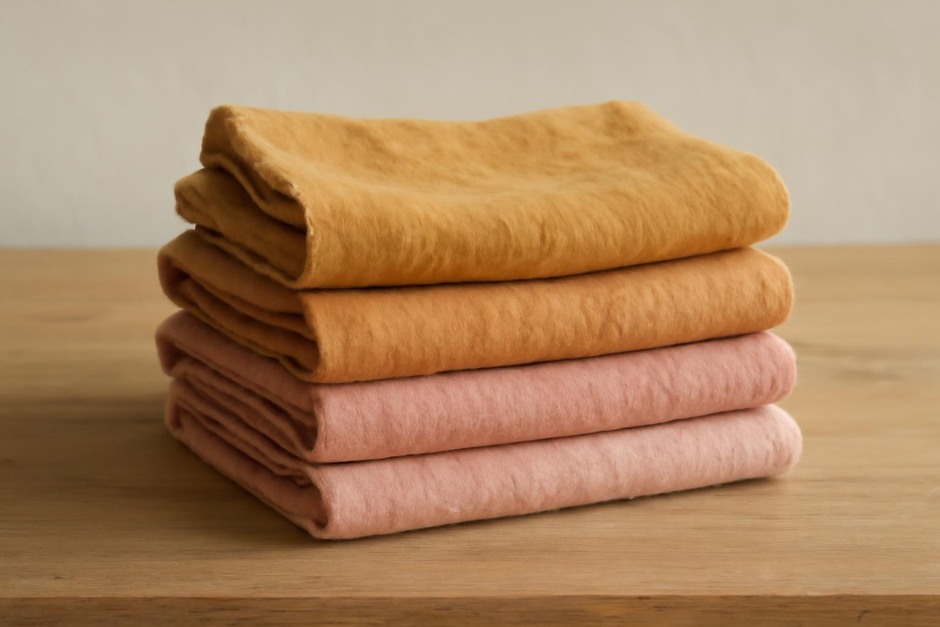
Onion skins and avocado pits are pantry scraps that yield warm, reliable colors: onion skins give golden to rust tones, avocado pits give dusty pinks to peach. The basic principle is simple: plant pigments leach into hot water, then fabric soaks up those pigments. Temperature, time, and the water’s acidity (pH) change the hue and depth. This guide walks a beginner through a single small batch, then offers variations and solutions to common problems.
Step-by-step method (one- to two-towel batch)
- Materials
- 1–2 natural-fiber tea towels (linen or cotton), pre-washed
- Onion skins: about 2 cups (loosely packed) for a warm gold/rust
- Avocado pits: 4–6 pits for a soft pink tone (use half-batches for both)
- Large stainless-steel or enamel pot (avoid reactive metals)
- Spoon, tongs, strainer, gloves, glass or ceramic containers
- White vinegar and baking soda (for pH adjustment), salt, and mild soap
- Prepare the fabric
Wash the towels to remove sizing and oils. While still damp, you can proceed directly to dyeing; damp fabric takes dye more evenly.
- Make the dye bath
For onion skin dye: place the skins in the pot and cover with water so there’s about 2–3 cm (1 inch) above the skins. Simmer gently for 30–45 minutes, then strain the liquid into a container. Expect a golden to amber liquid.
For avocado pit dye: break pits into smaller pieces and simmer 45–60 minutes; strain to reveal a dusty pink to salmon solution.
Small example: to dye one towel, use roughly 1 liter of strained dye; for two towels, use 1.5–2 liters or concentrate by simmering longer.
- Optional mordant/pH soak
To help color adhere and influence hue, you can pre-soak in a mild vinegar bath: 1–2 tablespoons of white vinegar per liter of warm water for 30 minutes. Vinegar tends to brighten and anchor many plant dyes. For deeper shifts, a pinch of baking soda in a separate test can alter some colors—test on a scrap first.
- Dyeing
Place the damp towel in the dye bath. Gently heat (do not boil aggressively) for 30–60 minutes, stirring occasionally for evenness. For richer color, turn off the heat and let the fabric steep in the cooled dye overnight. The longer the steep, the deeper the hue.
- Rinse and dry
Rinse the towel in cool water until it runs clear. Hang to dry away from direct, harsh sunlight to prevent fading. Wash separately for the first few launderings.
Small example to connect principle with result
If you dye one damp linen towel in 1 liter of onion-skin dye and steep overnight, expect a warm honey-gold. If you instead pre-soak that towel in a vinegar bath, the same dye will read slightly brighter and more amber—showing how pH and pre-treatment influence pigment bonding.
Variations
- Resist patterns: Fold and bind (simple pleats and rubber bands) or place leaves on the fabric and secure with a wrapped string before dyeing to create silhouettes.
- Layered colors: Dye first in a light onion bath, rinse, then overdye in avocado pigment for subtle peachy-brown tones.
- Other pantry dyes: Black tea for soft tans, turmeric for bright yellow (note turmeric can be permanent and very intense), and walnut hulls for deep brown.
- Concentrated potpourri method: Reduce the dye liquid to concentrate pigment before adding fabric for darker shades with less water.
Troubleshooting
- Uneven color: Often caused by uneven wetting or folding. Re-wet the towel thoroughly, put back into the dye and gently agitate. For stubborn streaks, a second full soak with regular stirring can help.
- Color too light: Reuse the same dye bath with the towel for a longer steep or simmer a second time to concentrate the dye and repeat the immersion.
- Fading quickly: Reduce exposure to hot water in laundering and to strong sunlight. Pre-soaking in a vinegar bath and washing in cool water will prolong color.
- Strange splotches: Mineral-rich tap water can cause spotting. Use filtered or distilled water for the dye bath if your tap water is very hard; alternatively, add a spoonful of salt to the dye bath to help even dye uptake.
- Sticky or musty residue: Rarely, a dye bath that cools without proper rinsing can feel tacky. Rinse thoroughly in warm then cool water and launder with mild soap; allow full drying between uses.
Natural dyeing rewards small experiments: keep notes on ratios, soak times, and any pH adjustments so you can repeat or tweak results. With a couple of onion skins and a few avocado pits, you can create reliable, homegrown tones and learn the simple chemistry that makes them stick.